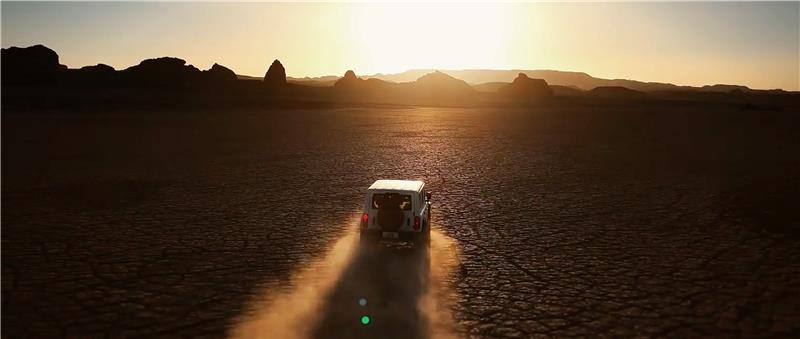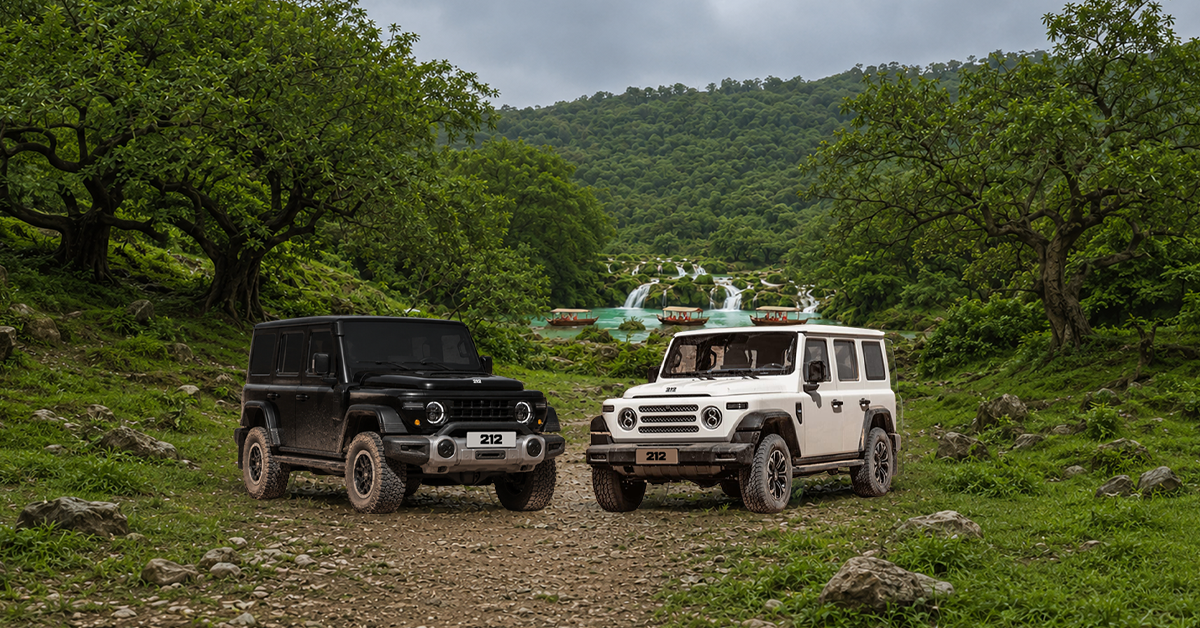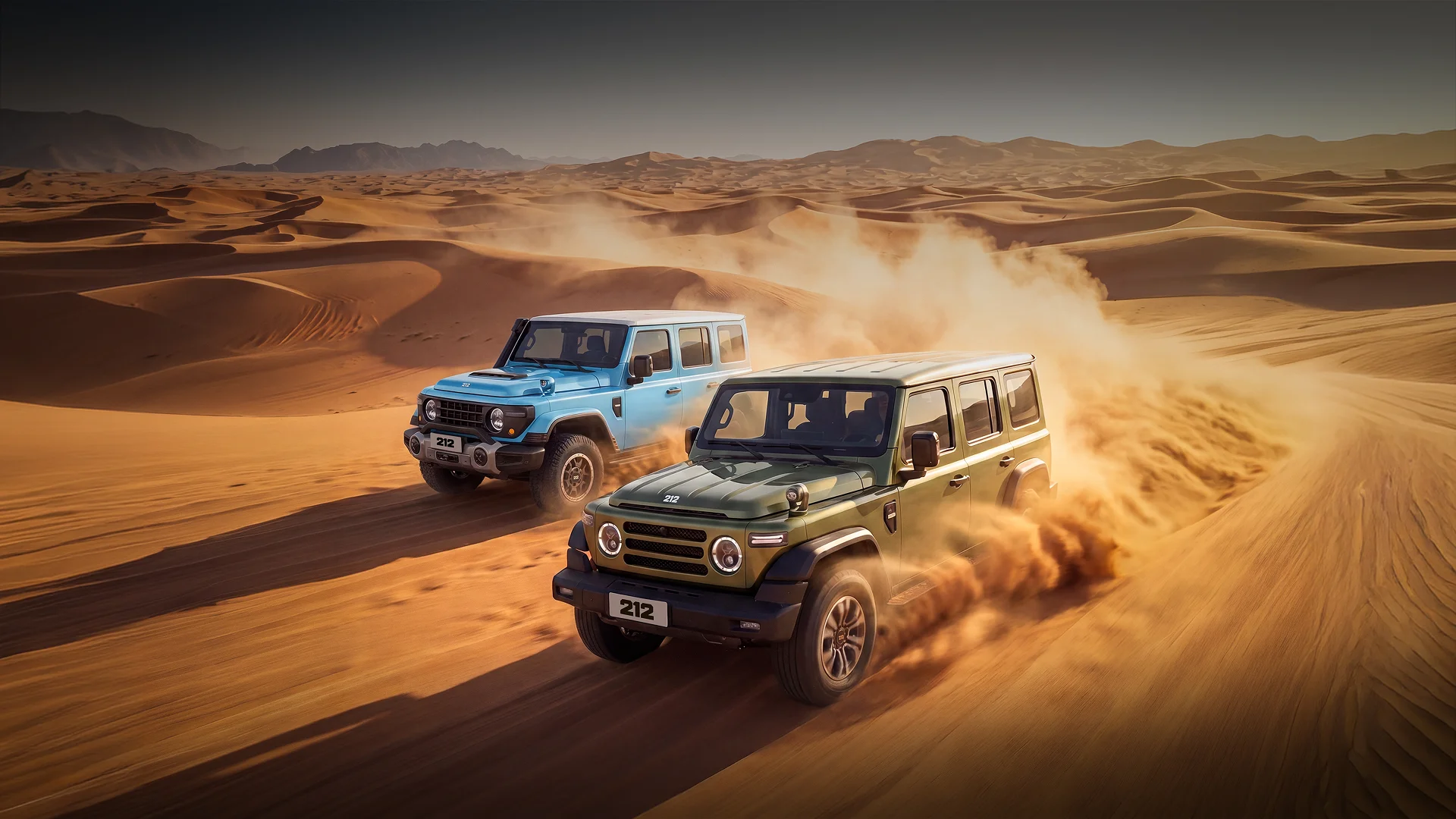

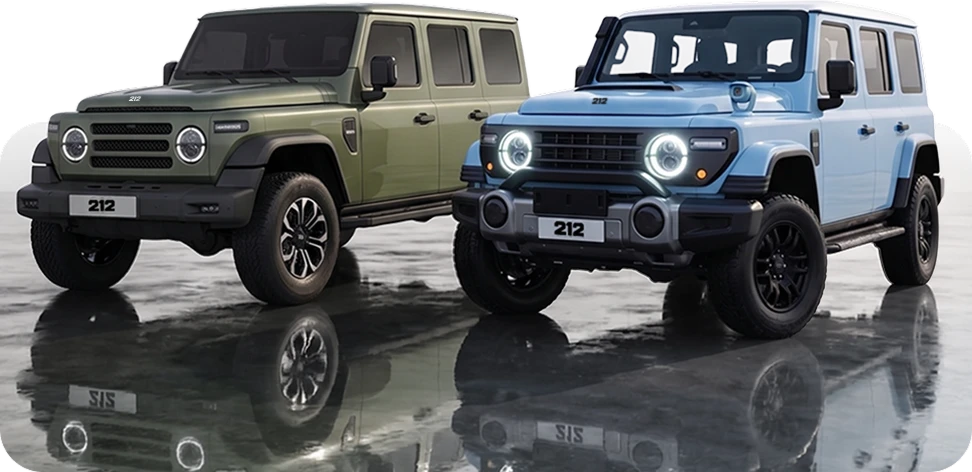
Exploration of Oman’s mountains, wadis, and deserts requires a capacity way beyond your average SUV. This is precisely why the 212 has quickly become one of the most talked about 4×4 SUVs to hit the market in Oman. Built on a true body-on-frame platform, this 4×4 SUV stands out among good off-road vehicles for its rugged engineering and serious capability. But what really sets it apart from other 4×4 off-road vehicles in Oman? Let’s find out one by one.
Can it handle the climbs around Jebel Shams and the Hajar Mountains?
So, you feel like going for a long adventure drive in Oman, across the mountains until you see the dawn? Do it with the thoroughbred 4×4 212 Adventurer. It features a turbocharged 2.0L engine that delivers 170 kW and 390 Nm of torque, coupled with an 8-speed automatic gearbox. It is equipped with 10 drive modes to select from, such as Sand, Rock, Mud & Wade, making it able to adjust itself immediately according to any changes in the terrain from tarmac roads to mountain trails. The Adventurer and Navigator 4×4 models both utilise a ladder frame structure body made of 99% high-strength steel.
What happens when one wheel loses grip on a rocky wadi bed?
Where most SUVs rely on basic traction control, the 212 SUV with its impressive 4×4 capability, goes further. Both models feature front, centre and rear differential locks, a setup typically reserved for high-end dedicated off-road vehicles. This means power gets distributed exactly where it is needed, whether crawling over loose rock in a wadi or pushing through soft sand, which is exactly what makes it one of the good off-road vehicles built for this kind of terrain. No more thinking about who gets out to push the vehicle once it’s trapped.
Will it clear the rocks and ruts on a typical Jebel track?
The 212 Adventurer features 235mm ground clearance along with approach and departure angles of 40.3º and 35.5º, respectively, whereas the 212 Navigator increases this to a formidable 252mm ground clearance, with approach and departure angles of 42.1º and 38.3º, respectively. When driving on Oman’s rocky bed of wadis and tough terrain of Jebels, clearance and geometry decide whether you’ll have a smooth adventure or a bad trip to remember.
Can it cross a flooded wadi after sudden rainfall?
Few 4×4 SUVs in this segment in Oman, can match the 212’s wading capability. The Adventurer manages a wading depth of 659 mm, while the Navigator pushes that to an extraordinary 910 mm. Both are paired with a climbing capability of up to 80%, making seasonal flooding and water crossings far less of a concern for drivers searching for good off-road vehicles in Oman.
How does it hold up over hours of rough desert and mountain driving?
Both vehicles have rigid axles, which are constructed specifically with the intention of absorbing any trouble offered by Oman’s mountainous terrain and desert tracks during long journeys. The Navigator model takes things even a step further by having dedicated accessories for this very purpose, such as a snorkel, cattle bar, and trailer square mouth. Very few 4×4 SUV vehicles within this price range in Oman can offer such a degree of off-road preparedness, leaving the 212 as one of the coolest off-road vehicles in existence.
The Verdict
Specification by specification, the 212 holds up as a genuinely capable off-road vehicle, not just a styled SUV with all-wheel drive. From triple differential locks to nearly a metre of wading depth on the Navigator, the engineering decisions point toward one purpose: real performance on Oman’s toughest terrain. That’s what you want, and with 212, that’s exactly what you get.
Frequently Asked Questions
1. What is the most important feature to look for in a 4×4 off-road SUV in Oman?
Ground clearance, differential locks and a strong chassis are the three features that matter most, since they determine how a vehicle handles rocks, loose terrain and uneven ground.
2. Do 4×4 off-road SUVs need four-wheel drive at all times?
No. Most off-road SUVs, including the 212 off-road 4×4 SUV, offers selectable drive modes so power can shift between two-wheel and four-wheel drive depending on the terrain, which also helps with fuel efficiency on regular roads.
3. Is wading depth really necessary for everyday driving?
For most daily commutes, it is not essential, but in regions with seasonal flooding or frequent wadi crossings, a higher wading depth means fewer routes are off-limits after rainfall.